
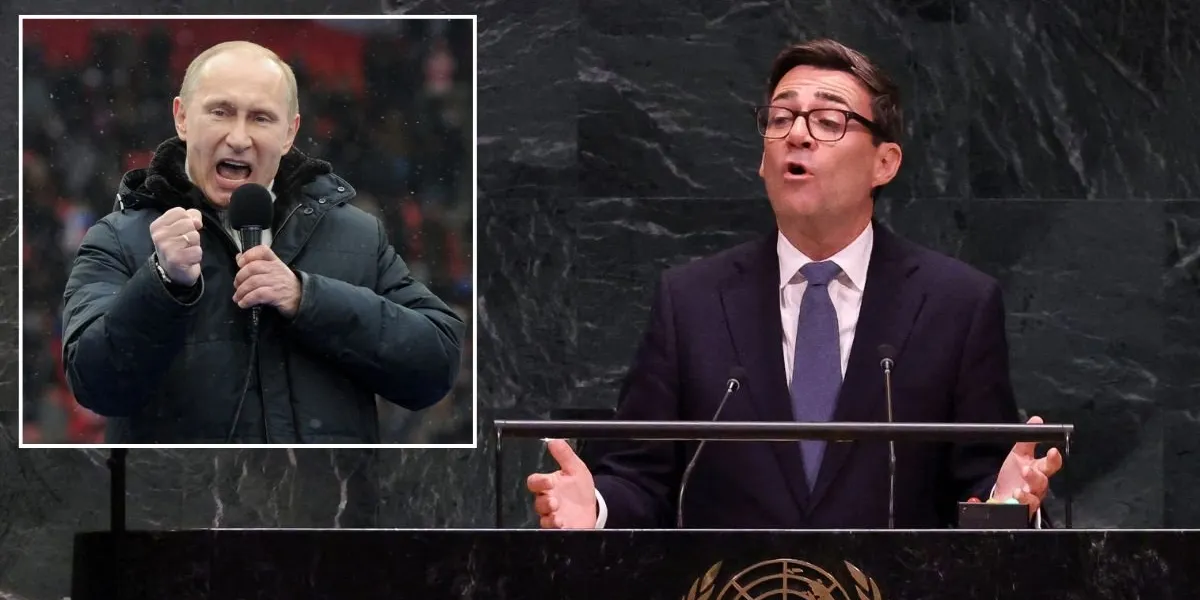
The Kremlin has accused Andy Burnham of stirring up anti-Russian sentiment after the Prime Minister accused Moscow of spreading lies and disinformation.
Mr Burnham, who met with Donald Trump last night, announced Labour would set up a new National Centre for Information Defence.
The Prime Minister directly singled out Russian interference across Europe, warning Moscow spends around £1.3 billion a year manipulating information.
He said: “They’ve amplified far-right narratives, and we have evidence that they tried to interfere with the 2019 General Election.”
However, Kremlin spokesman Dmitry Peskov blasted Mr Burnham for his approach.
Mr Peskov, who has served as the Russian President’s spokesman since 2000, said: “Well, the British Prime Minister said nothing new.
“That is the first point. The second is that stoking anti-Russian sentiment and fostering an atmosphere of total Russophobia is what Britain is doing.
“And now, presumably in unison with Britain, the Germans, the French and a number of other European states are doing the same thing.”
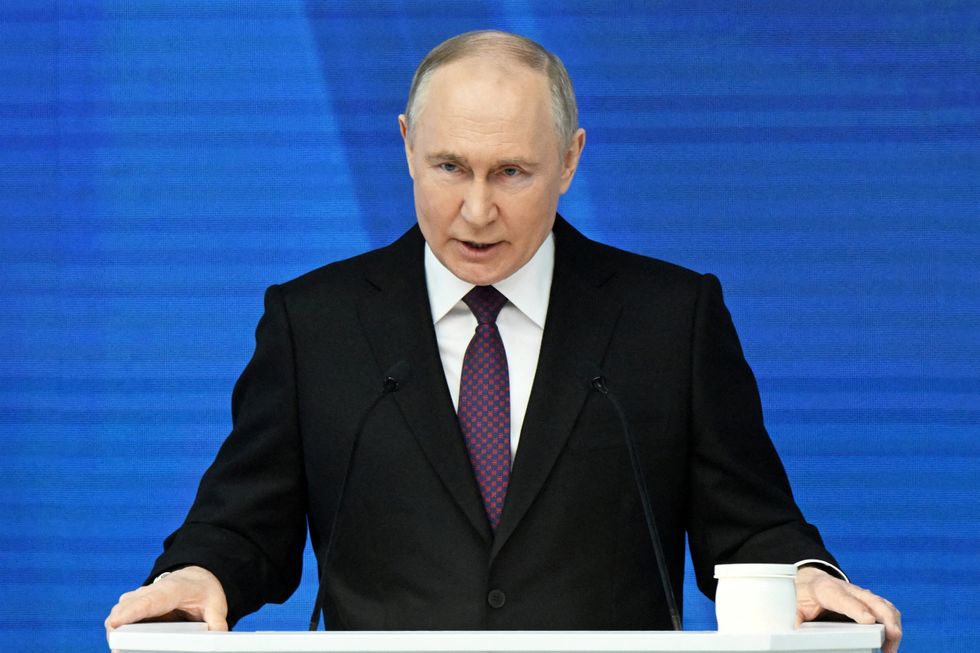
Vladimir Putin’s spokesman responded to Andy Burnham
|
REUTERSHe added: “From our point of view, this is an utterly short-sighted policy.
“It in no way brings us any closer to any steps that might, in the long term, lead to a reduction in tensions and de-escalation on the European continent.”
However, Mr Burnham also faced fury from Reform UK leader Nigel Farage and deputy Tory leader Alex Burghart amid fears of a free speech crackdown.
Defence Secretary Wes Streeting defended the announcement and tried to reassure Britons that the unit would not look to at domestic political debates.
 Andy Burnham announced plans for a new ‘National Centre for Information Defence’ to fight online ‘disinformation’ about the UK | PA
“We’re not interested in policing domestic political dissent,” Mr Streeting said.
But veteran Labour MP Graham Stringer appeared to break ranks with Mr Burnham.
He told GB News: “It’s a very sketchy proposal so far.”
Despite free speech concerns, Mr Burnham’s UN speech centred on the threat posed by Russia.
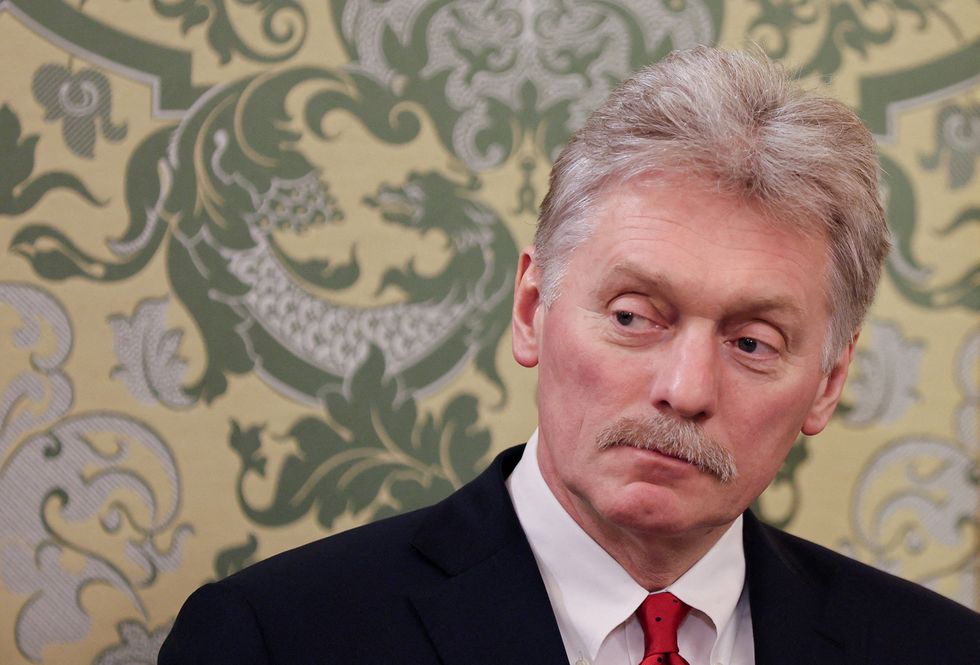 Kremlin press spokesman Dmitry Peskov |
REUTERS
A report released by the Intelligence and Security Committee in 2020 found the UK was a “top Western intelligence target” for the Kremlin, only behind Nato and US.
The report also warned Britain was “clearly a target” for disinformation campaigns around its elections.
However, the issue was described as a “hot potato”, with no one organisation taking a lead to tackle it.
Social media companies were told they “hold the key” but were accused of “failing to play their part”.
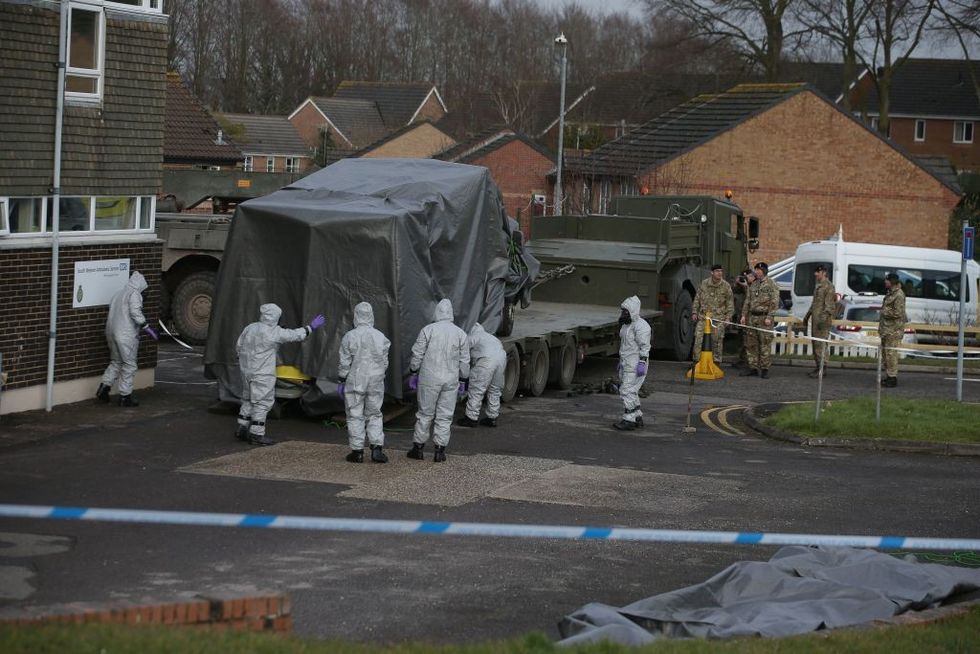 The scene of the Salisbury attack | GETTY
Russian disinformation campaigns have included a series of conflicting narratives over the 2018 Salisbury poisonings.
Moscow-linked sources blamed Britain and Ukraine, with some even suggesting the Skripals had been poisoned elsewhere.
UK officials have also exposed Russian-linked networks using fake websites, cloned media outlets, bot accounts and fabricated material.
The investigation found Russia was hoping to influence British audiences and undermine the UK’s support for Ukraine


Leave a Reply