
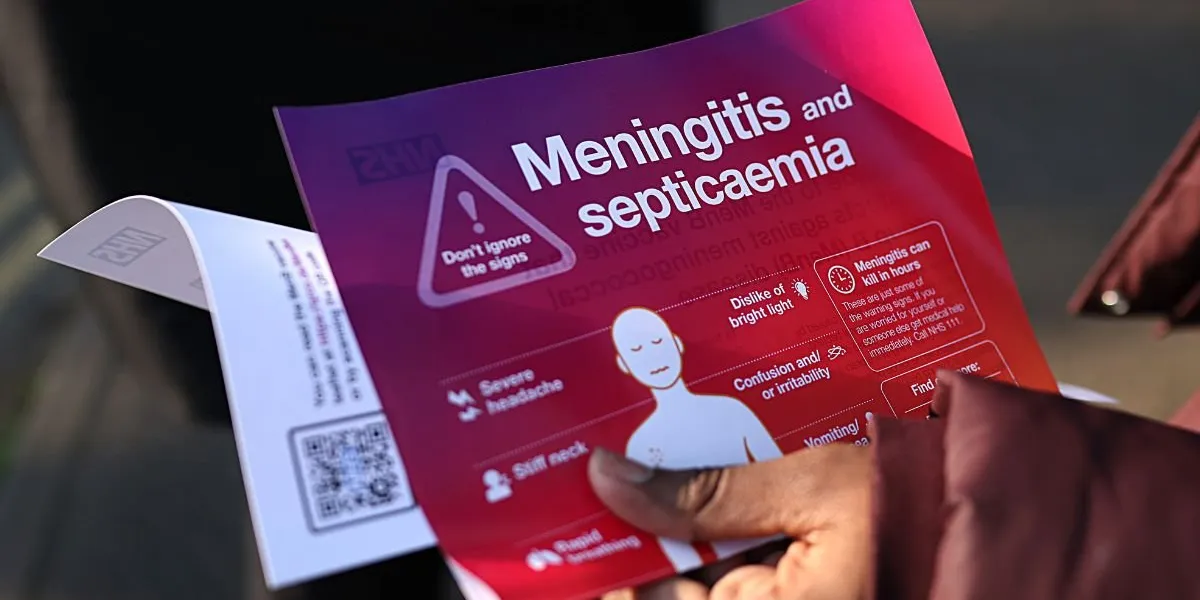
Health authorities are warning university students over a “dangerously low” uptake of the meningitis B vaccine among those most at risk.
Fewer than three in 10 young people eligible for the jab have come forward to receive even their initial dose, according to the latest figures.
The UK Health Security Agency has cautioned that deadly outbreaks “could occur again,” with cases historically surging during October and November, precisely when freshers are settling into halls of residence and mixing closely with new peers.
The warning comes as nearly 600,000 eligible young people remain unvaccinated against a disease that claimed three lives in England earlier this year.
The emergency vaccination programme was set up on July 20 following a series of outbreaks that began in Kent in March, which proved to be the fastest-growing and largest meningitis cluster ever recorded in the UK.
Among the three victims was Juliette Kenny, an 18-year-old who died on Saturday March 14, just one day after her first symptoms appeared.
Her family has since campaigned for routine access to the menB vaccine for teenagers and young adults.
Subsequent smaller clusters of the disease in Dorset and Berkshire were also larger than anticipated, prompting authorities to offer the jab through high street pharmacies to Year 13 pupils and under-25s entering university for the first time.

Students have been encouraged to come forward to collect the vaccine
|
PA
By September 20, only 212,549 of the 799,840 eligible Year 13 pupils had received the vaccine, an uptake rate of just 26.6 per cent.
Officials said coverage was rising gradually but remained far too low.
Regional disparities are adding to the concern. In the West Midlands, the picture is even bleaker: merely 23.2 per cent of eligible teenagers have had their first dose, with just 20,405 out of 87,808 coming forward.
Dr Sharif Ismail, a UKHSA consultant epidemiologist, said: “Our recent genomics study highlights how suddenly and unpredictably dangerous new strains of meningitis B can emerge, such as the one seen in the Kent outbreak. This means that similar outbreaks could occur again.”
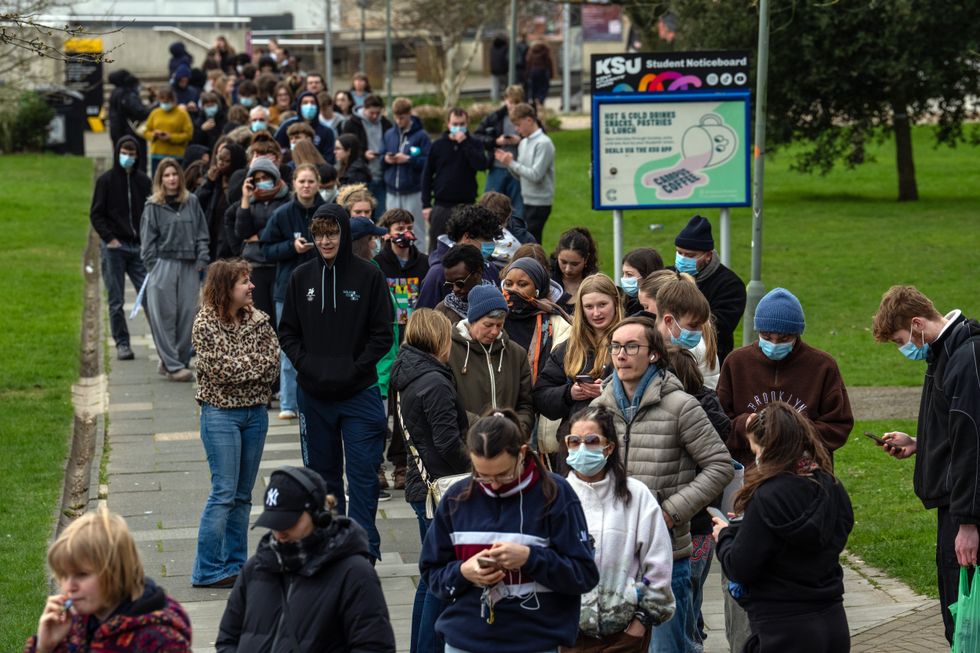 The strain of meningitis behind the outbreak in Kent was confirmed as a new form of MenB | GETTY
First-year university students face a risk of contracting meningococcal disease roughly seven times greater than peers of the same age who do not attend university, research has shown.
Prolonged close contact in halls of residence, shared housing and at social gatherings significantly raises the chances of transmission.
Caroline Temmink, NHS England’s director of vaccination, said: “We want to reach more young people, which is why the offer of menB vaccination remains in place at high street pharmacies across the country.
“We’re encouraging anyone who is eligible, particularly young people starting university for the first time, to come forward and get protected as soon as possible.”

Earlier this year hundreds of University of Kent students queued for the menB vaccine during Canterbury’s outbreak
|
GETTYThe vaccine requires two doses administered at least 28 days apart, offering robust protection for a minimum of five years.
Eligible groups include Year 13 pupils, undergraduate freshers born on or after 21 July 2001, and international students under 25 entering their first year.
Dr Tom Nutt, chief executive of the charity Meningitis Now, said: “We are really concerned that fewer than three in 10 eligible young people have received even their first dose of the MenB vaccine.”
He pointed to the outbreaks in Kent, Dorset and Berkshire as proof that the threat is far from hypothetical, adding: “The stark variation in uptake between the most and least deprived communities is particularly concerning.”
 Meningitis B can progress rapidly with fatal consequences | GETTY
Dr Nutt urged those who qualify to act without delay: “It’s safe, it’s effective, and for those young people who are eligible, it’s available for free through high-street and supermarket pharmacies.
“Don’t take a chance, book your vaccine today. It could save your life.”
The programme will remain open until March 31, 2027.


Leave a Reply