
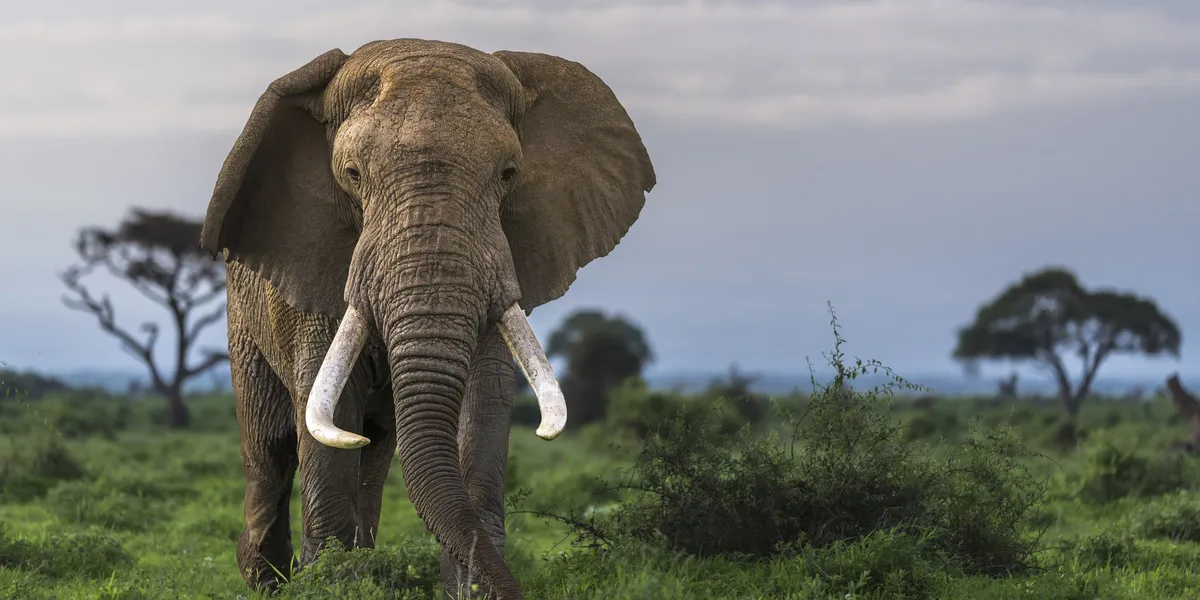
Elephants prepare carefully measured mixtures of medicinal plants and give them to their calves, new research has revealed.
Mother elephants living around Mount Elgon in western Kenya were seen chewing specific roots and leaves, then mixing the resulting mixture with their breast milk to feed their young.
The study, carried out by scientists at Hamburg’s Bernard Nocht Institute for Tropical Medicine, documents what appears to be the first known instance of a non-human species both creating and administering medicine to others of its kind.
Whilst self-medication has long been recorded among species such as great apes, no animal other than humans had previously been seen preparing treatments for members of its own species.
The research team, led by Dr Fabien Schultz, found that elephant herds in the region draw on no fewer than 35 distinct plant species for therapeutic purposes.
Four varieties of soils, minerals or clays were also identified as forming part of the animals’ health regimen.
Visibly unwell elephants were seen deliberately seeking out specific plants, with the paper describing this as “targeted rather than random foraging behaviour.”
Local scouts, national park rangers and community elders were the first to observe these remarkable practices.

Elephants prepare carefully measured mixtures of medicinal plants and give them to their calves, new research has revealed
|
GETTY
They shared their findings with the UK-based Mount Elgon Foundation, which in turn supported the German researchers’ work.
These elephants were already globally famous for using their tusks to mine deep caves for dietary minerals on the slopes of Africa’s oldest extinct volcano, which sits on the Kenya-Uganda border.
Many of the plants the elephants eat have established roles in Indigenous traditional medicine and have been scientifically verified as having antibacterial, anti-inflammatory, or antiparasitic properties.
The study notes that earlier reports from Kenya documented pregnant elephants consuming Boraginaceae family leaves to bring on labour and ease postpartum symptoms.

Mother elephants were seen chewing specific roots and leaves, then mixing the resulting mixture with their breast milk to feed their young
|
GETTY
Kenyan women mirror this practice by brewing tea from the same plants.
Separate research published in 2025 on African forest elephants in Gabon revealed that individuals carrying heavier parasite burdens preferentially ate banana stems and papaya plants over more nutritious alternatives.
Both contain compounds known to combat intestinal parasites.
The paper warns that destruction of elephant habitats could cut off access to vital medicinal resources.

The study was carried out by scientists at Hamburg’s Bernard Nocht Institute for Tropical Medicine
|
GETTY
This makes preserving these ecosystems critical for both the animals’ welfare and wider biodiversity.
Scientists at the Bernard Nocht Institute are now conducting laboratory analyses of the identified plants to establish their precise pharmacological properties.
Christopher Powles, Chair of the Mount Elgon Foundation, originally identified the traditional knowledge underpinning the study.
He said: “The findings provide further evidence for the exceptional cultural behaviour of Mount Elgon’s elephants, already well known for their cave-mining activities, and suggest that their medicinal knowledge may be socially transmitted across generations.”


Leave a Reply