

New research has revealed the deadly meningitis outbreak that killed two students in Kent was a new strain.
The March 2026 outbreak was linked to a nightclub in Canterbury with 21 people being diagnosed with invasive meningococcal disease (IMD) in one week.
Following the outbreak linked to Club Chemistry, two teenagers died and nine required intensive care.
Experts at the UK Health Security Agency (UKHSA) and the University of Oxford used bacterial genome sequencing to understand why the outbreak was so severe.
Researchers found that the bacteria that caused menB picked up small pieces of DNA from other bacteria in a process known as horizontal gene transfer.
This allows bacteria to borrow genetic traits without reproducing, thus altering how bacteria interacts with human cells, according to the analysis.
This made it particularly effective at causing severe illness and may have potentially impacted how it was recognised by the immune system.
According to the UKHSA, these invasive strains can emerge suddenly and are unpredictable, meaning similar outbreaks are likely to occur again.

The outbreak caused massive waits
|
PAConsultant in pathogen genomics at UKHSA Dr Charlene Rodrigues said: “This investigation shows just how quickly and dramatically these bacteria can change, sometimes acquiring new traits from harmless bacteria circulating nearby, that make them more likely to cause disease.
“The fact this outbreak variant was able to spread to so many young people was due to the social environment, a place where lots of close social mixing takes place.
“Through genomic surveillance and sequencing every cultured case of invasive meningococcal disease in England, we can spot when something unusual is emerging and understand what we’re dealing with in real-time.
“What’s particularly interesting about this research is that it suggests the very same genetic changes that made this strain so dangerous may also explain why it hasn’t continued to spread.

Club Chemistry was at the centre of the outbreak
|
PADr Rodrigues added this may also explain why it did not continue to spread.
She said: “But that is not something we could have predicted and these genetic events can happen again.
“That unpredictability is exactly why continued surveillance and rapid response systems are so important, as are vaccination and public awareness of the signs and symptoms of meningococcal disease.”
Following the Kent outbreak, a one-off menB vaccination programme was launched to protect young people heading to university this autumn.
 Earlier this year hundreds of University of Kent students queued for the menB vaccine during the city’s outbreak | GETTY
In July, the Joint Committee on Vaccination and Immunisation (JCVI) also recommended that teenagers should be offered the jab on the NHS around the age of 15, with catch-up programmes for those who would otherwise miss out.
The findings will be presented at the UKHSA’s annual conference in Manchester.
When asked if the outbreak could happen again, Chief Scientific Officer at the UKHSA Professor Robin May, told the BBC: “It varies by particular bacteria.
“In this case, neisseria, which is the group of organisms that can cause meningitis, are actually permanently sampling, if you like, DNA from the environment and they have this capability to do it.
“Obviously, it requires them to pick up a piece of DNA that then helps them become invasive, which is a relatively rare event.
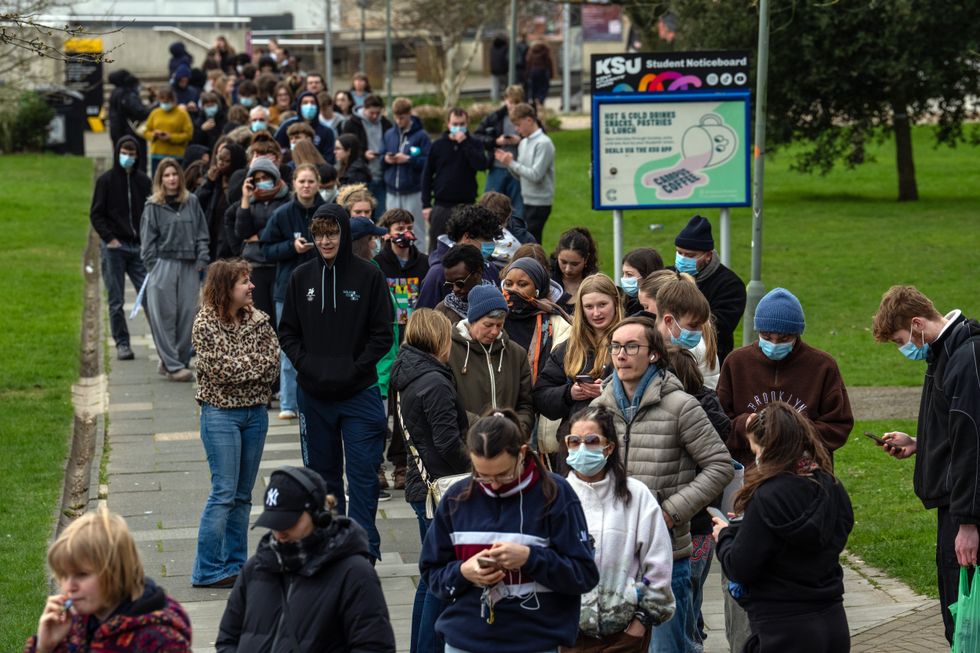
The strain of meningitis behind the outbreak in Kent was confirmed as a new form of MenB
|
GETTYProfessor May also urged youngsters to get their menB vaccination when offered one, saying: “If you are eligible for vaccination, this is really, really critical.
“This is university starting week. So if you’re listening to this, I appreciate it’s a bit early in the morning for most university students, but if you’re listening to this at university and you haven’t had your two doses and you’re eligible, please do go get those.
“If you’re a parent of a small child and you’re offered infant vaccination, please do take it up.
“Vaccines remain by far and away the best way to protect yourself from this disease.”


Leave a Reply