
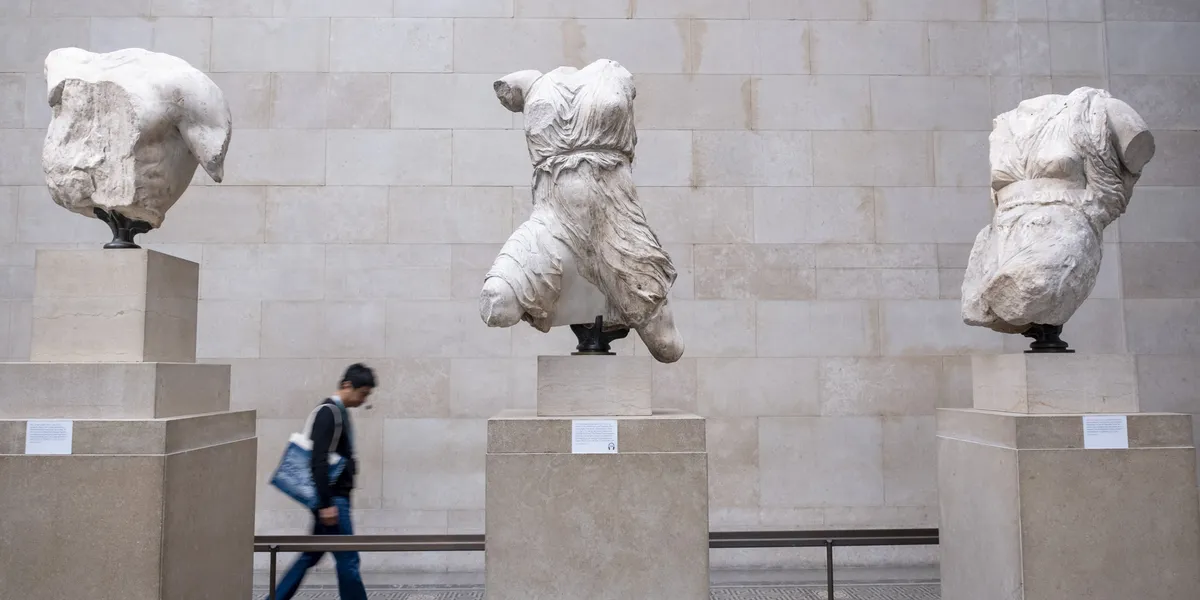
Efforts to reach an agreement over the future of the Elgin Marbles are said to have broken down, after years of discussions between Greece and the British Museum.
The talks, which resumed in 2021 as Athens sought the permanent return of the Parthenon sculptures, are understood to have stalled over a fundamental disagreement about ownership.
Greek officials regard the ancient works as Greek property, and want them returned to Athens, while the British Museum claims to be legally responsible for the sculptures and is only willing to lend them.
Sources told GB News said there are currently no negotiations taking place as a result and that Athens has indicated discussions are unlikely to restart in the immediate future.
Communication channels have reportedly remained open, however, leaving room for the situation to change.
The dispute centres on the legal status of the sculptures, which were removed from the Parthenon in the early 19th century by Thomas Bruce, the seventh Earl of Elgin, when Greece was under Ottoman rule.
Elgin removed sculptures from the temple, as well as sections of its celebrated frieze and other marble features.
He later sold the collection to the British government, which transferred it to the British Museum in 1816.
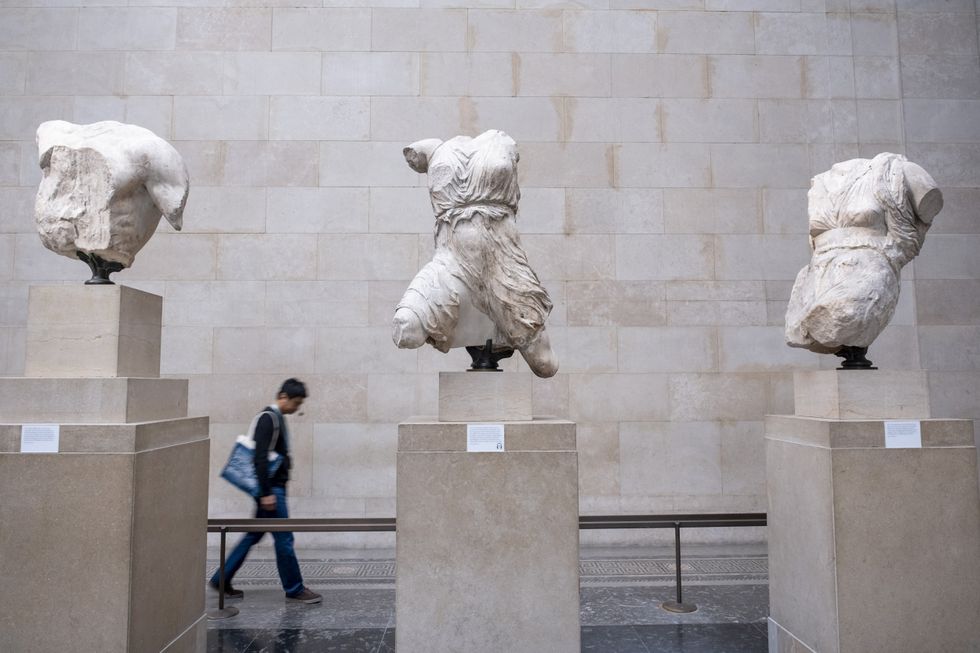
The Greek government has pushed for a return of the Elgin Marbles, which it claims were stolen
|
GETTYThe museum has argued that Elgin obtained permission from Ottoman authorities to remove the works.
Greece disputes that interpretation and has long maintained that the sculptures were taken unlawfully.
A possible compromise had been under discussion in recent years.
Rather than requiring either side to abandon its position outright, negotiators explored arrangements under which the sculptures could spend extended periods in Athens, without the British Museum formally relinquishing ownership.
Among the proposals was a system under which Greece could lend other ancient artefacts to Britain.
The objects could potentially serve as an incentive for an agreement and provide assurances over the eventual return of the Parthenon sculptures.
Former chancellor George Osborne, who chairs the British Museum, had previously expressed optimism that an agreement could be reached, suggesting the sculptures could be displayed in both London and Athens.
British Museum director Nicholas Cullinan had also pointed to the institution’s agreement with France over the loan of the Bayeux Tapestry as an example of how long-term cultural loans could help resolve disputes over important historic objects.
 The Elgin Marbles were said to have been acquired by Lord Elgin between 1801 and 1805 |
GETTY
The comparison was reportedly rejected by Greek officials, who argued that circumstances were fundamentally different.
There is no competing ownership claim over the Bayeux Tapestry, nor was the medieval work divided and removed from the country in which it was originally created.
Athens wants the Parthenon sculptures reunited with the remaining works from the monument, which are displayed at the Acropolis Museum.
Greece restated its claim at a recent Unesco meeting in Paris, while Britain has continued to reject Greek demands.
Turkey intervened in the dispute in 2024, backing Athens and challenging the British account of the Ottoman authorisation.
Turkish representatives said they had searched Ottoman archives and found no evidence of the document cited by Britain.


Leave a Reply