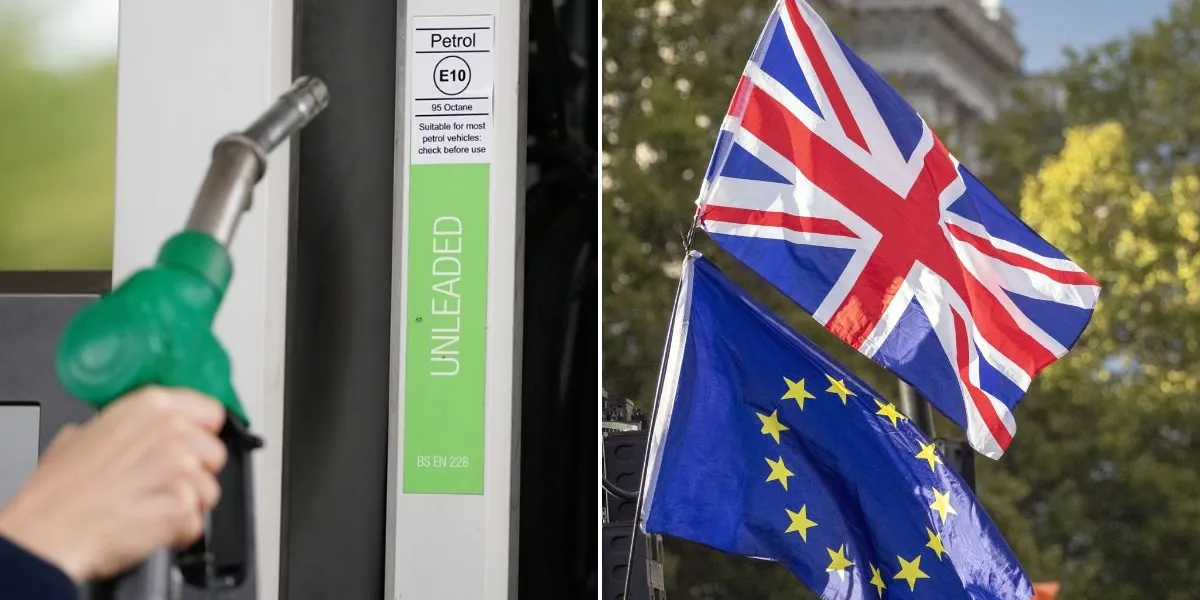
Motorists could see a number of new driving laws introduced in the coming weeks as the UK Government prepares for high-stakes talks with the European Union.
Prime Minister Andy Burnham will meet with his European counterparts in November to discuss several trade matters, while closer to home, “rip-off” pedicabs will face new restrictions in London.
With new rules being introduced over the next month, GB News has rounded up the most important driving law changes in November that could impact you.
Euro 7
New emissions standards will apply to petrol, diesel and electric vehicles from November 29, 2026.
The latest Euro 7 emissions standards from the EU will apply to new light-duty vehicle models from November, and new heavy-duty vehicle models from May 2028.
Following a consultation, the Government will lay a statutory instrument to update the minimum emission standard for all new light-duty vehicle registrations in Great Britain to Euro 7 from November next year.
A further consultation will analyse how to put Euro 7 standards in practice for heavy-duty vehicles once EU legislation is further developed.

Pedicabs
From October 30, 2026, a new licensing regime and a maximum journey fare will be introduced for pedicabs and rickshaws operating in London.
Transport for London announced earlier this year that they would need to pay for a licence, meet English language requirements, pass a safety test, and hold a theory test certificate
Pedicabs have been hammered in recent years after being accused of charging “rip-off fares” and “blaring music”.
LATEST DEVELOPMENTS
- Renault boss hails ‘golden time’ for electric cars in the UK as EV sales surge
- Labour accused of ‘throwing good money after bad’ with £1.35bn fuel duty extension
- Driving law changes you missed in October – New licence restrictions, MOT test rules and more

Tariffs
The long-awaited UK-EU summit will take place on November 20, with Prime Minister Andy Burnham heading to Brussels to meet with European Council President Antonio Costa and European Commission President Ursula von der Leyen.
Reports have suggested that the UK would be granted “trusted partner” status with the EU’s “Made in Europe” plan if certain agreements are met.
It has been claimed that Germany and France have called on the UK to impose tariffs on Chinese vehicles to level the playing field and protect under pressure European manufacturers.
Automotive brands from China have made an immediate impression on the UK and European markets in recent years, with the likes of BYD, Jaecoo and Omoda dominating sales just a short time after launching.

The EU currently imposes a 45 per cent tariff on Chinese electric vehicles, in addition to tariffs on certain manufacturers after conducting a probe.
This includes tariffs on BYD (17 per cent), Geely Group (18.8 per cent), SAIC Group (35.3 per cent), and Tesla’s Shanghai operation (7.8 per cent).
A Government spokesperson told GB News: “We always put trade measures in place independently and based only on the UK’s economic interests and those of industry.
“However, Europe and the UK face many of the same challenges, which is why it is vital we protect trade flows between us.
“We want to explore deeper cooperation with the EU to unlock opportunities for industry and strengthen economic growth, while avoiding collateral damage in our shared ambition of tackling unfair trading practices globally.”
Our Standards:
The GB News Editorial Charter
