
Palaeontologists have identified a new species of extinct crocodile from fossil remains preserved in the very same limestone blocks that were quarried to construct the Great Sphinx of Giza. The creature, named Herugavialis cairensis, belongs to an ancient group of long-snouted crocodilians known as gavials.
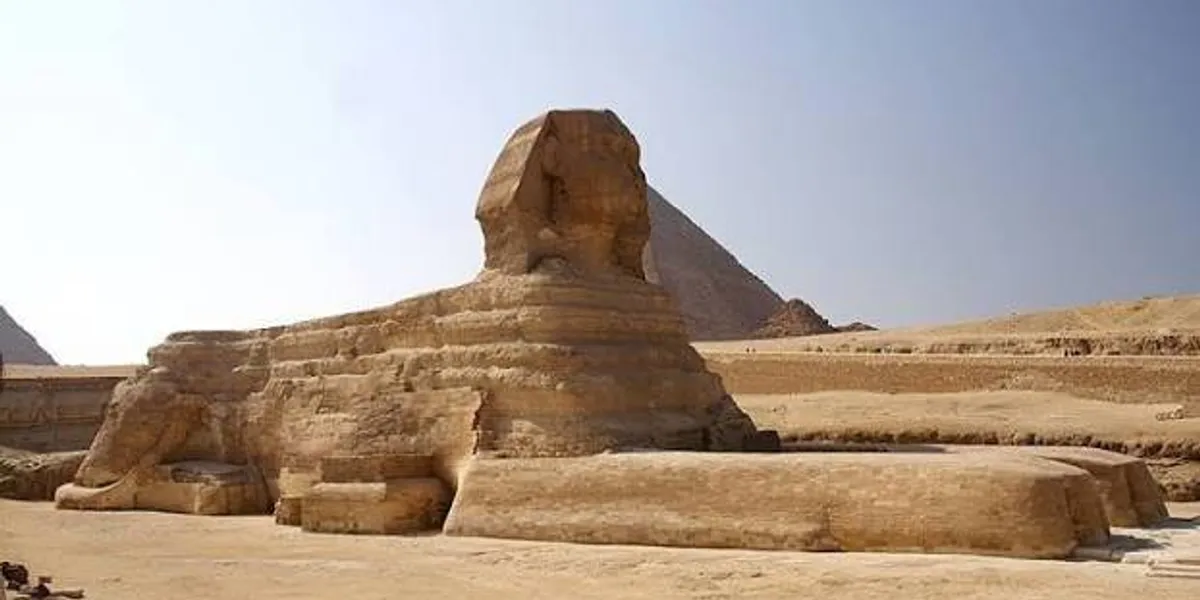
The discovery, published today in Royal Society Open Science, reveals an intriguing parallel between fossil and monument. The crocodile’s skull lacks the end of its snout, mirroring the Sphinx’s famously absent nose tip.
The research represents an international effort involving scientists from Britain, Sweden, Germany and Egypt. Their findings challenge existing understanding of how these distinctive crocodilians spread throughout the ancient Mediterranean, a region now entirely devoid of crocodiles.
The fossil specimens were collected during the 1920s from the Mokattam Formation, a geological layer dating back roughly 45 million years to the Middle Eocene period. At that time, warm shallow seas covered much of present-day Egypt.
Initial examination of the nearly complete skull led early researchers to classify the remains within the genus Tomistoma, based on superficial similarities to the false gharial. The specimens remained under this classification for decades within museum collections.
Modern computed tomography scanning enabled the research team to examine internal skull structures without causing damage to the fossils. This technology revealed previously invisible anatomical features distinguished the Egyptian specimens from Tomistoma.
The detailed re-analysis of both internal and external skull characteristics uncovered sufficient differences to warrant establishing not only a new species but an entirely new genus.
Dr Paul Burke, from the Swedish Museum of Natural History in Stockholm, headed the research team. Professor Philip Mannion, at University College London, served as co-leader of the study.

Fossil remains were preserved in the very same limestone blocks that were quarried to construct the Great Sphinx of Giza
|
WIKIMEDIA COMMONS
The genus designation draws from Heru, an Egyptian deity who researchers believe may have inspired the iconic monument itself. The species designation cairensis refers to Egypt’s capital city, near which both the fossil and the Sphinx are located.
According to Professor Mannion, the team selected this name because of the striking similarity between the damaged crocodile snout and the Sphinx’s missing nose. Both specimens share origins in the same Eocene limestone deposits from the Giza plateau.
The naming connects geological deep time with human history in an uncommon manner. The ancient limestone quarried for Egypt’s monuments contained fossils of creatures that inhabited those waters tens of millions of years before stone carvers began their work.
Herugavialis cairensis shared the ancient Egyptian waters with at least two additional gavial species, indicating a surprisingly diverse crocodilian community within a single marine habitat. This coexistence contradicts assumptions gavials functioned exclusively as freshwater specialists.
The presence of multiple long-snouted crocodiles in the same coastal ecosystem points towards resource partitioning amongst these predators. Modern tropical fish-eating species similarly divide habitats and prey to reduce competition.
Dr Burke notes Mediterranean crocodile diversity fluctuated dramatically across the past 50 million years, corresponding to shifts in global temperature and sea levels. Warmer periods accompanied by higher seas created expansive shallow marine habitats favoured by gavials.
Conversely, cooling temperatures and retreating waters reduced available territory for these species. The pattern demonstrates how environmental conditions directly shaped crocodilian populations throughout deep time in ways that mirror changes documented elsewhere in the fossil record.
The identification of Herugavialis cairensis highlights how contemporary analytical methods can extract new discoveries from historic museum collections. Fossil materials gathered nearly a century ago and catalogued under familiar classifications yielded an entirely novel species when subjected to CT scanning and current comparative techniques.
The transformative capacity of these modern tools demonstrates specimens collected using earlier methods still hold unrevealed scientific information.
Such re-examination proves particularly valuable for understanding extinct fauna whose true diversity may remain obscured in existing collections.
The Mediterranean’s crocodilian population met its definitive end approximately six million years ago during the Messinian salinity crisis, when the region experienced severe drying. This event eliminated all crocodiles from the area entirely.
Today the Mediterranean remains unique amongst warm-climate seas in its complete absence of living crocodilian species, a situation that stands in stark contrast to the rich diversity documented in the fossil record from periods like the Eocene.

Leave a Reply