
More than six in ten people believe Britain should produce its own oil and gas ahead of importing it, a Government survey on Net Zero shows.
Asked whether “the UK should produce less of its own oil and gas even if that means we need to buy more fuel from other countries”, just 13 per cent of respondents agreed. A total of 61 per cent disagreed, with 43 per cent disagreeing “strongly”.
The findings were revealed in the Department for Energy Security and Net Zero’s Public Attitudes Tracker, a survey of more than 3,000 adults across the UK.
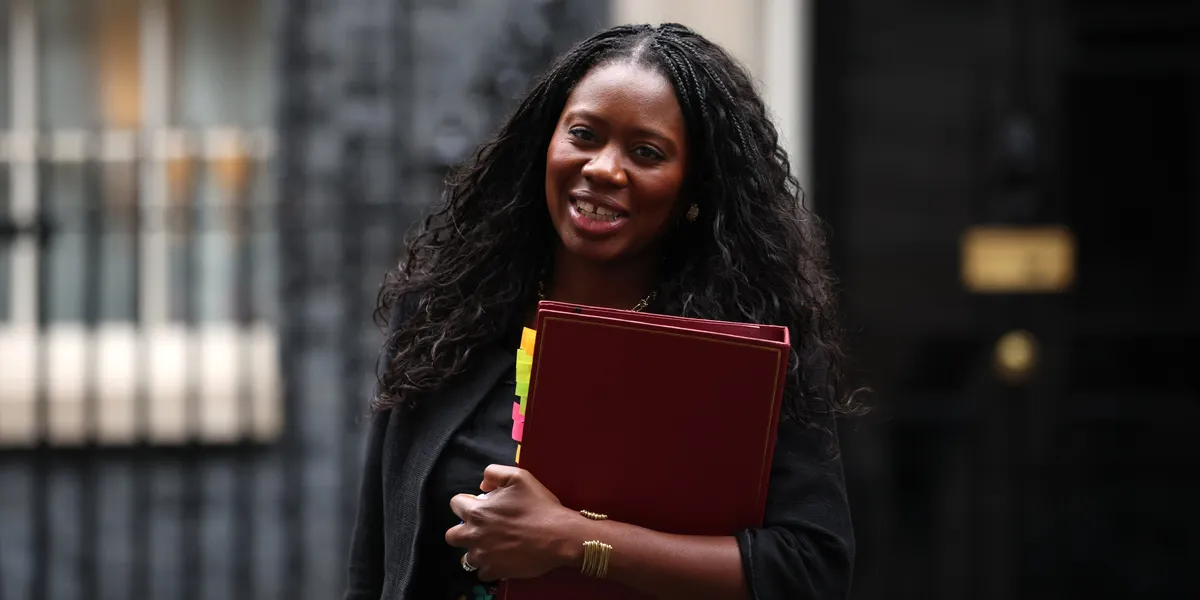
Domestic oil and gas production has proved a controversial issue for the Government. Last week, Energy Secretary Miatta Fahnbulleh approved Jackdaw – a giant gas field 155 miles east of Aberdeen.

She still has to decide on Rosebank, Britain’s largest untapped oil field, which lies in the North Atlantic. Drilling at both sites was halted after legal challenges on climate grounds.
Environmentalists oppose both projects. Following Jackdaw’s approval, Green Party leader Zack Polanski said the move was “a betrayal of all of our futures”.
But industry experts have said the fields would boost energy security and the economy.
Kathryn Porter, Energy Consultant at Watt-Logic, said: “The government’s own figures show the public understands what ministers have been slow to accept, that energy produced at home is more secure than energy bought from abroad.
“Approving Jackdaw was a welcomed first step, but if ministers want to keep Britain’s lights on and homes warm, they need to listen to the country and keep backing the gas we can produce here.”
The Government tracker also showed that a warming planet remained a worry for the public, with eight in ten people concerned about climate change. Almost four in ten (38 per cent) said they were “very concerned”, a rise of four points from Spring.
However, levels of overall concerns about climate change have fallen from a high of 85 per cent in Autumn 2021.
Renewable energy remained popular, with 79 per cent supporting it and just four per cent opposed.
But nearly four in ten (39 per cent) believed Net Zero policies would have a negative short-term impact on the UK economy, compared to 22 per cent who predicted a positive impact.
Over the longer term – specified as ten years or more – more expected a positive economic impact (51 per cent) than a negative one (24 per cent).
The most important aspect of energy policy was “having a reliable, uninterrupted supply of energy available”, with 92 per cent of respondents giving this a “high” or “very high” priority.
This was followed by the cost of energy and the UK becoming “self-sufficient and not buying fuel from other countries”.
Asked about energy security concerns in the next 10 to 20 years, 92 per cent said they feared steep rises in prices. 83 per cent worried about over-dependence on other countries and 82 per cent worried about increased power cuts.
Speaking separately, David Whitehouse, chief executive of trade association, Offshore Energies UK, called for the Budget to support the North Sea.
He said that the Energy Profits Levy, or windfall tax, should be replaced next year. The levy sees operators pay a total rate of 78 per cent on profits.
It is due to be replaced in 2030 by the Oil and Gas Revenue Levy, which will tax revenue once oil and gas prices rise above set thresholds.
Mr Whitehouse said a “pragmatic fiscal approach” could unlock billions of pounds of private investment in homegrown energy.
He said: “This Budget is an opportunity to send a clear message that Britain is serious about growth, the energy transition and investment in its own energy future.
“The Government has said that reindustrialisation is a key priority. The Budget is an excellent opportunity to show that Britain will support industrial communities and back UK industry, not imports.”
Our Standards:
The GB News Editorial Charter